The shift
The best financial workflow is barely noticed.
A platform should reduce effort without weakening control. Employees don't join a company to manage receipts. Managers don't want another approval queue. Finance teams shouldn't spend their best attention correcting cost centres or chasing missing documents.
Make routine financial work disappear — without making financial control disappear with it.
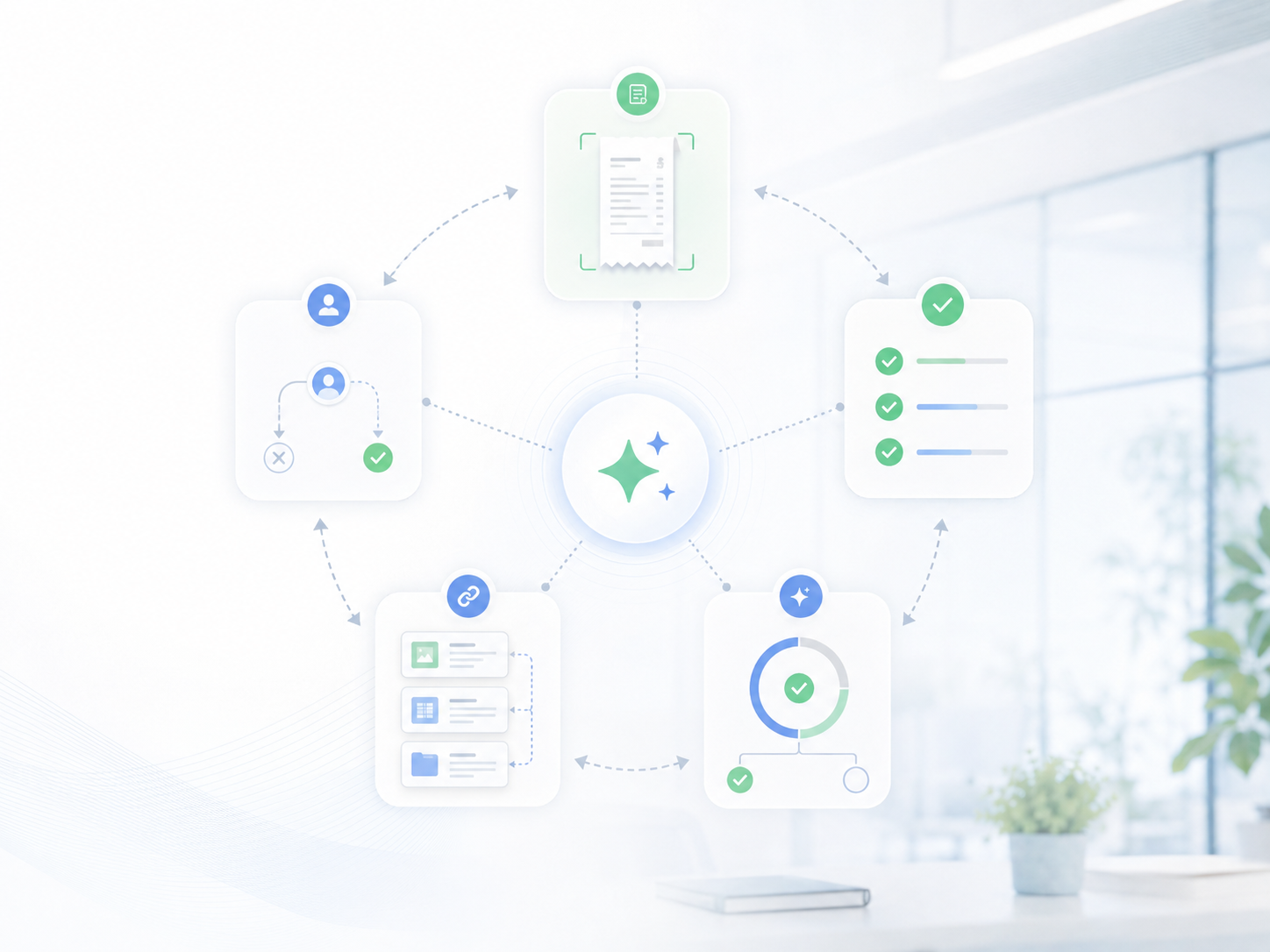
One company, two fragmented money journeys. Employee expenses (capture → submit → approve → reimburse → report) and supplier invoices (receive → extract → code → validate → approve → reconcile) are two entrances into the same spend-intelligence platform. Treating them separately creates duplicated rules, fragmented data and inconsistent experiences.
Data model
Organise around the spend event.
A scalable platform starts with the shared business object, not with screens.
The Spend Event ties every dimension together: Actor, Merchant, Supplier, Amount, Currency, Category, Tax, Cost Centre, Project, Policy, Evidence, Approval, Accounting Outcome.
Trustworthy automation
The TRACE model for intelligent spend automation.
Trustworthy automation uses confidence and context, not blind certainty.
Transaction captured once
Information enters once and becomes reusable across the workflow.
Rules applied continuously
Policy, tax, risk and organisational rules run throughout the journey.
Automation driven by confidence
High-confidence decisions are automated; uncertainty is surfaced clearly.
Context preserved end to end
Every correction, approval and exception remains traceable.
Exceptions routed intelligently
People spend time on judgement and ambiguity, not repetitive checking.
The purpose of AI is not to eliminate people. It is to reserve human attention for the decisions where it creates the most value.
AI should compress effort, not hide accountability. AI can extract, classify, recommend and detect: read receipts and invoices, suggest categories and tax codes, detect duplicates and unusual spend, recommend approvers, learn recurring supplier patterns. But finance automation is trusted only when users can see why a decision was made, what confidence it had, and how it can be corrected.
Product & architecture
Expenses and invoices operate at different rhythms.
Shared intelligence does not require identical implementation.
Employee expenses favour
Fast mobile interaction, immediate feedback, simple policy guidance, high-volume small transactions.
Accounts payable favours
Document ingestion, complex coding, multi-stage approvals, accounting integration.
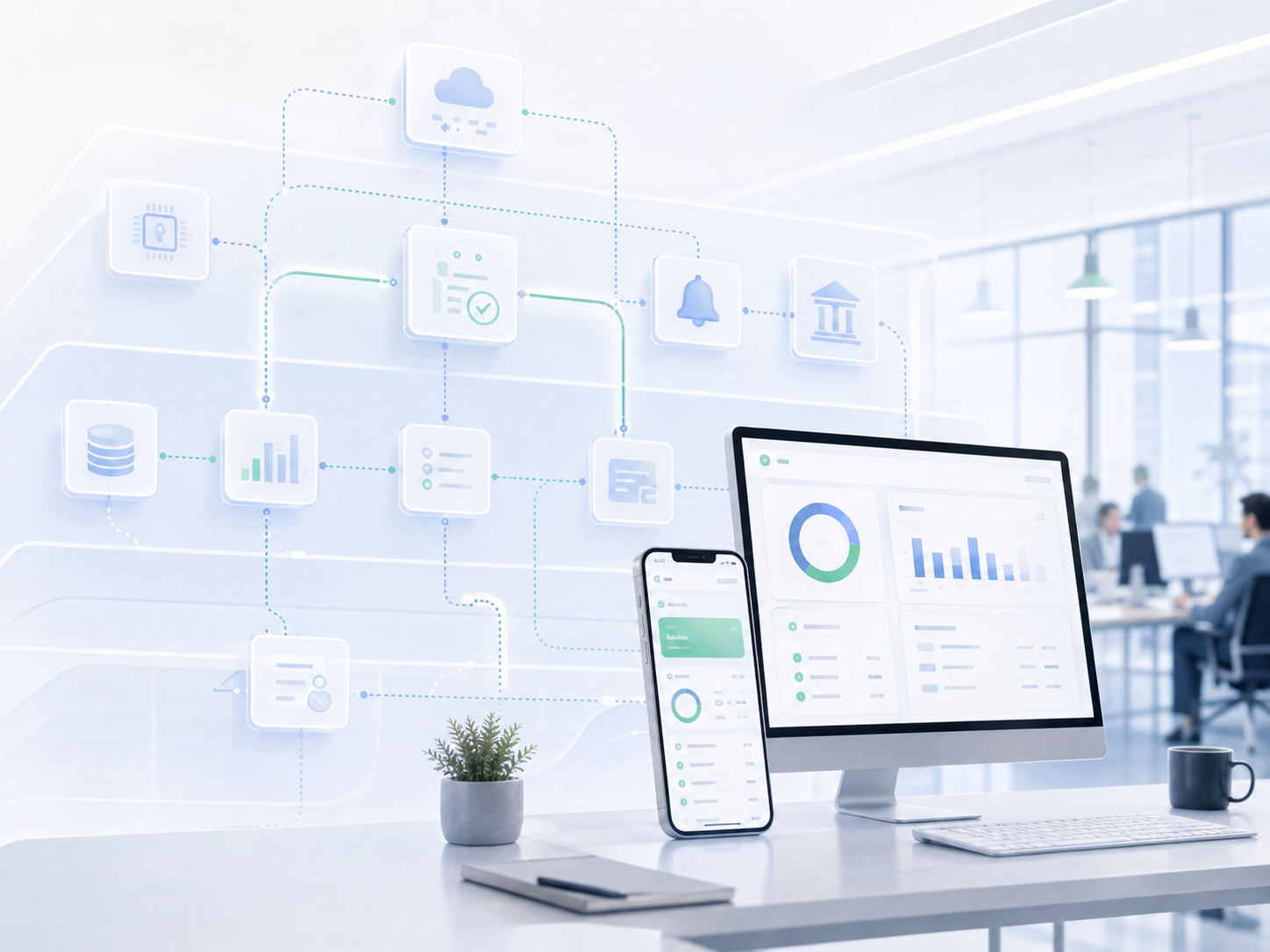
Unify identity, policy, spend context, approvals and analytics — while letting each workflow scale in its own way. Architecture must make complexity feel simple: the customer should not see the system complexity; the engineering organisation must. A practical platform combines synchronous APIs for user interactions, asynchronous events for longer workflows, idempotent processing and retry paths, and explicit states, ownership and observability.
Prevention & measurement
Product success begins before submission.
A finance platform should prevent friction progressively, not process errors efficiently.
The most valuable workflow is not the one that processes an error efficiently. It is the one that prevents the error from occurring.
Measure attention returned to the business, not processing volume. User experience (time to submit, corrections per submission, mobile abandonment); automation (straight-through processing, recommendation acceptance, human intervention); finance operations (capture-to-approval time, duplicate spend prevented, coding effort removed); platform health (integration success, latency, recovery time, cost per workflow); business value (faster visibility, stronger compliance, better forecasting, time returned). The strongest metrics measure effort removed and decisions improved.
Engineering discipline
The engineering model behind invisible software.
Invisible work requires visible engineering discipline.
Clear domain ownership
Product and engineering collaboration, from the same shared spend event outward.
Small, reversible releases
Strong automated testing and observable workflows, so a bad change is cheap to undo.
Production feedback
Continuous simplification, driven by what actually happens in production, not assumptions.
The goal is not simply to release financial features. It is to create a platform that learns from every transaction, exception and customer interaction without losing reliability.
What this means
The future of spend management is not another dashboard with more controls.
It understands financial context, automates repetitive work, explains important decisions, detects risk early, preserves human control, and learns from corrections.
The best finance platform may be the one users spend the least time using — and trust the most.
Kaustav Das — SaaS Product Builder · Product Architect · Engineering Leader
← ziaz.eu
 Ziaz Digital
A white paper
Ziaz Digital
A white paper